
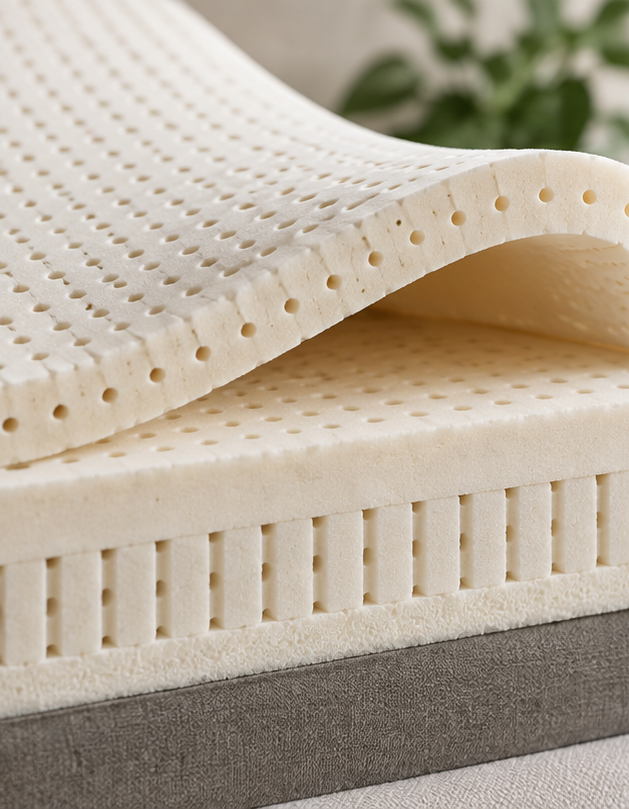
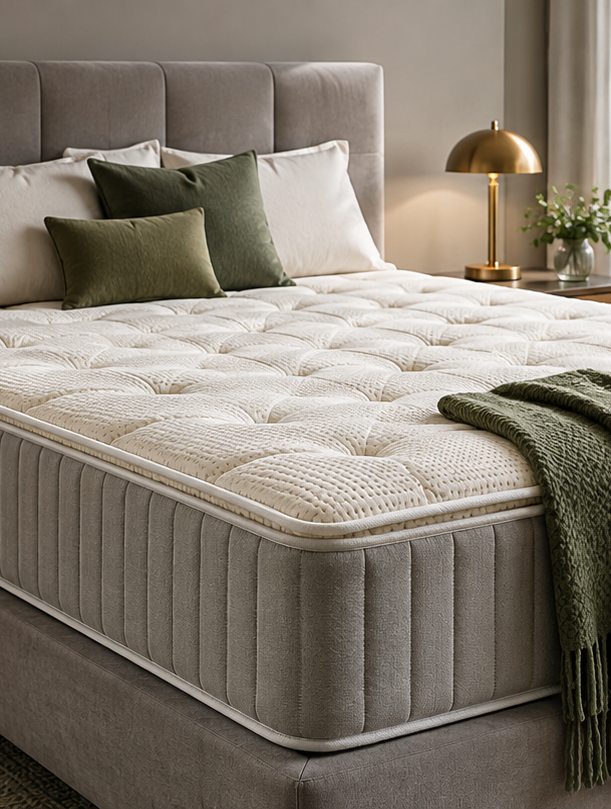
Latex mattresses are valued for their responsive comfort and ability to follow the body without the slow sinking sensation associated with some foam categories. Business buyers often consider latex when they want to present a mattress program with stronger comfort language, a more premium story, and a resilient surface feel. LuxeBella Group Inc. supports B2B buyers by helping clarify whether natural latex, synthetic latex, or hybrid latex construction better fits the intended market and budget.
Natural latex is produced from rubber tree material and is commonly associated with breathability, elasticity, and a higher price position. It can create a buoyant sleeping surface that supports body curves while still allowing easier movement. For buyers serving wellness-focused retailers, boutique hospitality properties, or higher-tier residential furnishing projects, natural latex can be a strong category because it offers a clear product story and a comfort profile that feels different from conventional spring-only designs.
Synthetic latex is generally made from petrochemical-derived materials and is often selected when cost control is important. It can provide a latex-like feel, but the elasticity, breathability, and long-term resilience may be weaker than higher-quality natural latex. This does not make synthetic latex unsuitable; it means buyers should define the expected use case and product tier clearly. For some distribution programs, synthetic latex or blended latex can help create an accessible comfort option while keeping the commercial proposal realistic.
Latex can be used as the main core or as a comfort layer over springs or other support materials. Hybrid latex mattresses are common in B2B programs because they combine the airflow and support of springs with the responsive comfort of latex. A buyer may request different layer thicknesses, firmness levels, covers, quilting designs, and compression packaging methods depending on the target customer and channel.
Latex products should be discussed with attention to oxidation, storage, heat exposure, cover protection, and packaging. Natural latex can require careful handling and should be protected from prolonged light exposure before use. Commercial buyers should also review certifications, odor expectations, firmness rating, layer composition, and claims that will be used in sales materials. Clear documentation helps prevent misunderstanding between sourcing discussions and final contract terms.
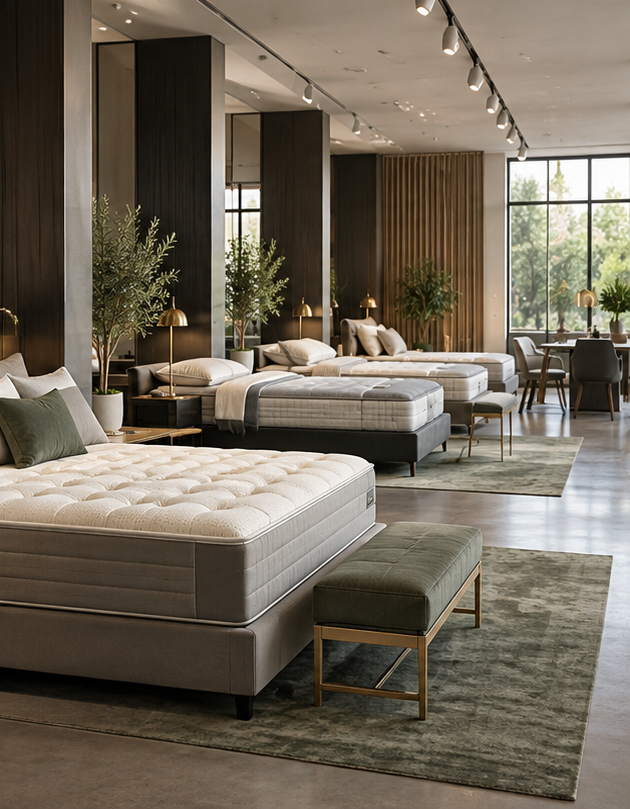
Retail buyers may use latex mattresses to create a premium comfort category, while hospitality buyers may evaluate latex for rooms where a responsive and breathable feel is important. Project operators may consider latex hybrid designs when they want a product that feels upgraded but still has structural support from a spring or foam base. Each scenario requires a different balance of comfort, durability, price, and communication detail.
A responsible latex inquiry should include whether the buyer prefers natural, synthetic, blended, or hybrid construction; the expected firmness; the desired layer thickness; cover material; packaging method; target price position; and any claim language that may be used in customer-facing materials. LuxeBella Group Inc. can then help organize the discussion around realistic options rather than broad product assumptions.
LuxeBella Group Inc. presents this category for business buyers who need documented product discussions rather than a retail cart. Every request is reviewed through email or the inquiry form, followed by requirement confirmation, commercial discussion, contract execution, and agreed payment terms.
B2B Specification Review
Before any mattress category moves into a commercial proposal, LuxeBella Group Inc. expects the buyer to provide enough information for a serious specification review. Helpful details include company identity, intended market, product category, size range, firmness preference, target use environment, packaging needs, estimated quantity, timing expectations, and destination region. These details allow the discussion to focus on practical product fit rather than assumptions based on category names alone.
The review also separates general website information from contract-level commitments. Website pages explain product categories and cooperation methods, but they do not create final specifications, prices, delivery responsibilities, warranties, or payment obligations. Those items must be confirmed through written commercial communication and contract documents. This is especially important for B2B mattress programs because construction, comfort layer choices, packaging, destination, and inspection expectations can materially change the final arrangement.
Buyers are encouraged to share operational priorities early. A retailer may need showroom language and category differentiation. A hotel buyer may need consistent comfort across many rooms. A distributor may care about carton handling and repeatable specifications. A furnished housing operator may prioritize durability and replacement planning. LuxeBella Group Inc. uses documented communication to keep these requirements visible as the conversation progresses.